Torres del Paine without camping, at a glance
| Can you visit without camping? | Yes. Stay in a hotel in Puerto Natales and go into the park on guided day trips, or sleep in refugio dorms on the W without a tent |
|---|---|
| Best base | Puerto Natales, about 1 hour 45 minutes by road from the Laguna Amarga side of the park |
| Longest day | Base Torres: about 22 km (14 mi), roughly 1,400 m of gain, 8–10 hours of hiking |
| Gentler days | Cuernos sector and Mirador Cóndor (about 7.5 km), horseback riding, the Grey Glacier boat (about 2 hours 45 minutes on the water) |
| Park pass | Online only, before you travel. Not sold at the gate |
| Winter rule | From April 27 to August 30 a guide is required on the Base Torres trail and on the W; CONAF can extend it when snow and ice remain |
| O Circuit | The back of the massif (Dickson, Los Perros and the pass) closes in winter; CONAF announces the reopening |
| Our programs | Torres del Paine Active (7 days) and Torres del Paine Classic (5 days), both from one hotel with breakfast every night |
You can see Torres del Paine without sleeping in a tent. The simplest way is to base yourself in a hotel in Puerto Natales and go into the park on guided day trips: the Base Torres hike, the Cuernos sector, a boat to Grey Glacier and a dawn puma tracking outing. We run that week as a 7-day program, and a gentler 5-day version.
Three ways to see the park without a tent
The phrase "without camping" covers three different trips, and it helps to know which one you want before you book anything.
1. A hotel in Puerto Natales and day trips into the park. You sleep in the same bed all week, carry a daypack, and a guide drives you to a different sector of the park each day. This is what most people mean, and it is the option this article is about.
2. The W Trek sleeping in refugio dorms. The W is a 4 to 5 day hike between refugios. You can book a bed in a shared dorm instead of a tent, so technically there is no camping, but you still walk every day with your pack and sleep in a different place each night. If that is what you want, our guided W Trek page explains how the nights work.
3. A hotel inside or outside the park. There are hotels and lodges inside the park and around its edges, and more options in Puerto Natales. A hotel inside the park puts you closer to the trails and is usually the most expensive way to do it. We use both in tailor-made trips, depending on the dates and the budget.
The rest of this guide is about option 1, because it is the one that works for the widest range of travelers: couples, families with teenagers, groups where not everyone wants a 10-hour day, and anyone who could not get the refugio nights for a trek on their dates.
Who this is for, and who it is not for
This is for you if you want to see the towers, the Cuernos, the glaciers and the wildlife, and you want a shower and a bed every night. It works for mixed groups: the fitter members do Base Torres while the others take a viewpoints day, and everyone meets for the boat.
It is not for you if what you want is the trek itself: the feeling of walking from one end of the park to the other with everything on your back. A hotel-based week gives you the same views in a different order, but not that. In that case look at the W Trek or the O Circuit.
It is also not for you if you are not ready for one long day. Base Torres is about 22 km and roughly 1,400 m of climbing, usually 8 to 10 hours. You can skip it, but if the towers are the reason you are coming, you need to be in good condition for that one day.
Why Puerto Natales is the base
Puerto Natales is the town closest to the park. From a hotel there, the road to the Laguna Amarga side of the park takes about 1 hour 45 minutes, which is why pickups for Base Torres are around 06:00. Depending on the entrance you use, the park is 2 to 4 hours away, so the days are long, but you come back to town every evening with restaurants, shops and a real bed.
Flying in, you have two airports. Punta Arenas (PUQ) has flights all year and is about 3 hours by road from Puerto Natales. Puerto Natales (PNT) has seasonal flights from Santiago and Puerto Montt. On our programs the pickup and drop-off are arranged at booking for whichever airport matches your flights.
What a hotel-based week looks like
This is our Torres del Paine Active program, day by day. It is 7 days and 6 nights, in a 3-star hotel in Puerto Natales with breakfast included, with five guided days and groups of 1 to 6.
Day 1. Arrival. Pickup at PUQ or PNT, transfer to the hotel in Puerto Natales. The rest of the day is free.
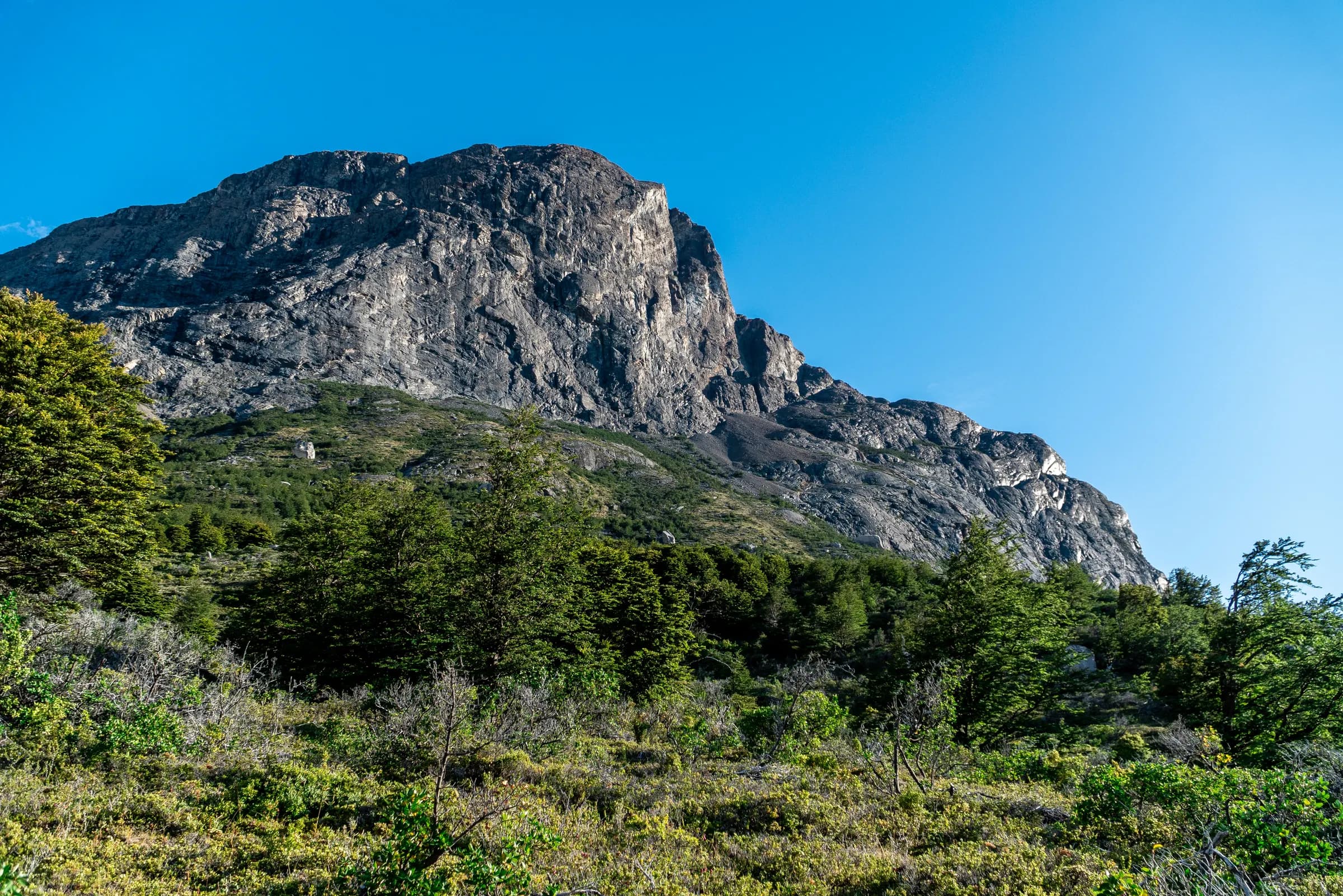
Day 2. Base Torres. Pickup around 06:00 and about 1 hour 45 minutes to the park. With your guide you climb the Ascencio valley, cross Paso de los Vientos to Refugio Chileno, go on through lenga forest and finish with about 45 minutes of steep, rocky moraine to the lake at the foot of the towers, where you stop for lunch. Then the same trail down. About 22 km (14 mi), roughly 1,400 m of gain, usually 8 to 10 hours; back at the hotel around 18:00. Poles and crampons are provided.
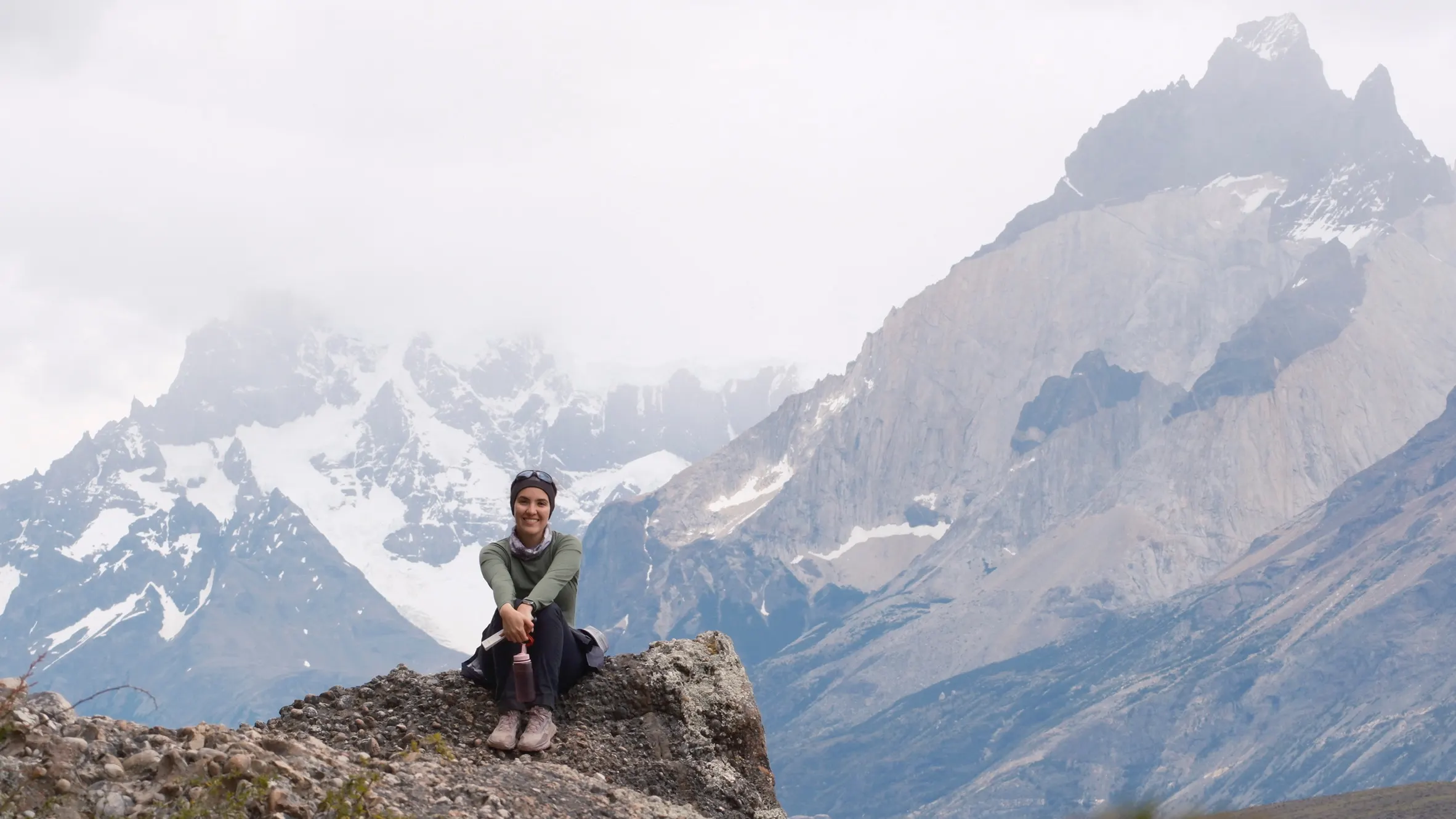
Day 3. Cuernos sector and Mirador Cóndor. A lighter day after Base Torres, with about 7.5 km (4.7 mi) of walking facing the Cuernos del Paine. The Cóndor trail is a 2.4 km round trip, about an hour, to a viewpoint over Lago Pehoé and its lagoons, with the Southern Patagonian Ice Field and the Sierra Baguales on the horizon.
A note from Matías: Mirador Cuernos was the first trail I guided when I started working in the park, and it still has a special place for me. It is an easy walk with one of the best views in the whole park.
Day 4. Horseback ride on an estancia. A change of pace after two days on foot: a 3-hour ride in a small group on an estancia about 30 km from Puerto Natales, with a little over two hours in the saddle. Pickup and return are at your hotel, and the rest of the afternoon is free in town. Experienced riders can ask for a longer 6-hour ride instead. Tell us each rider's level in advance so the ride suits the group, and wear the same layers you hike in: the wind does not drop because you are on a horse.
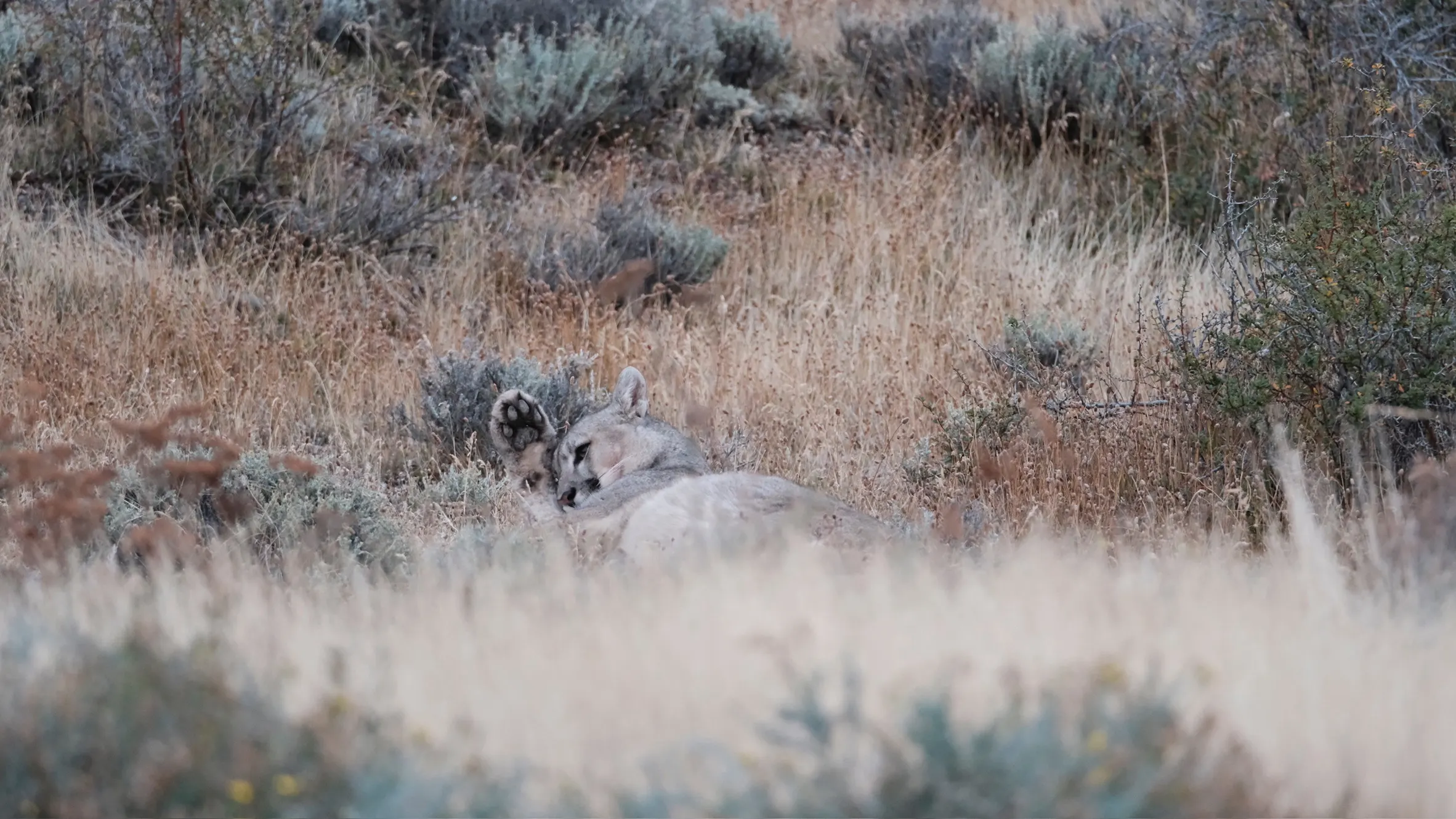
Day 5. Puma tracking. Pickup between 04:00 and 06:00 depending on the season and the time of sunrise, then about 1.5 hours to the eastern side of the park, around Laguna Amarga. You track at sunrise with a wildlife guide, take a break mid-morning and go out for a second session. Expect short walks over uneven ground; some days cross private land next to the park, off the trail. You may also see guanacos, Andean condors, foxes and ñandús. Sightings cannot be guaranteed. Minimum age 14.
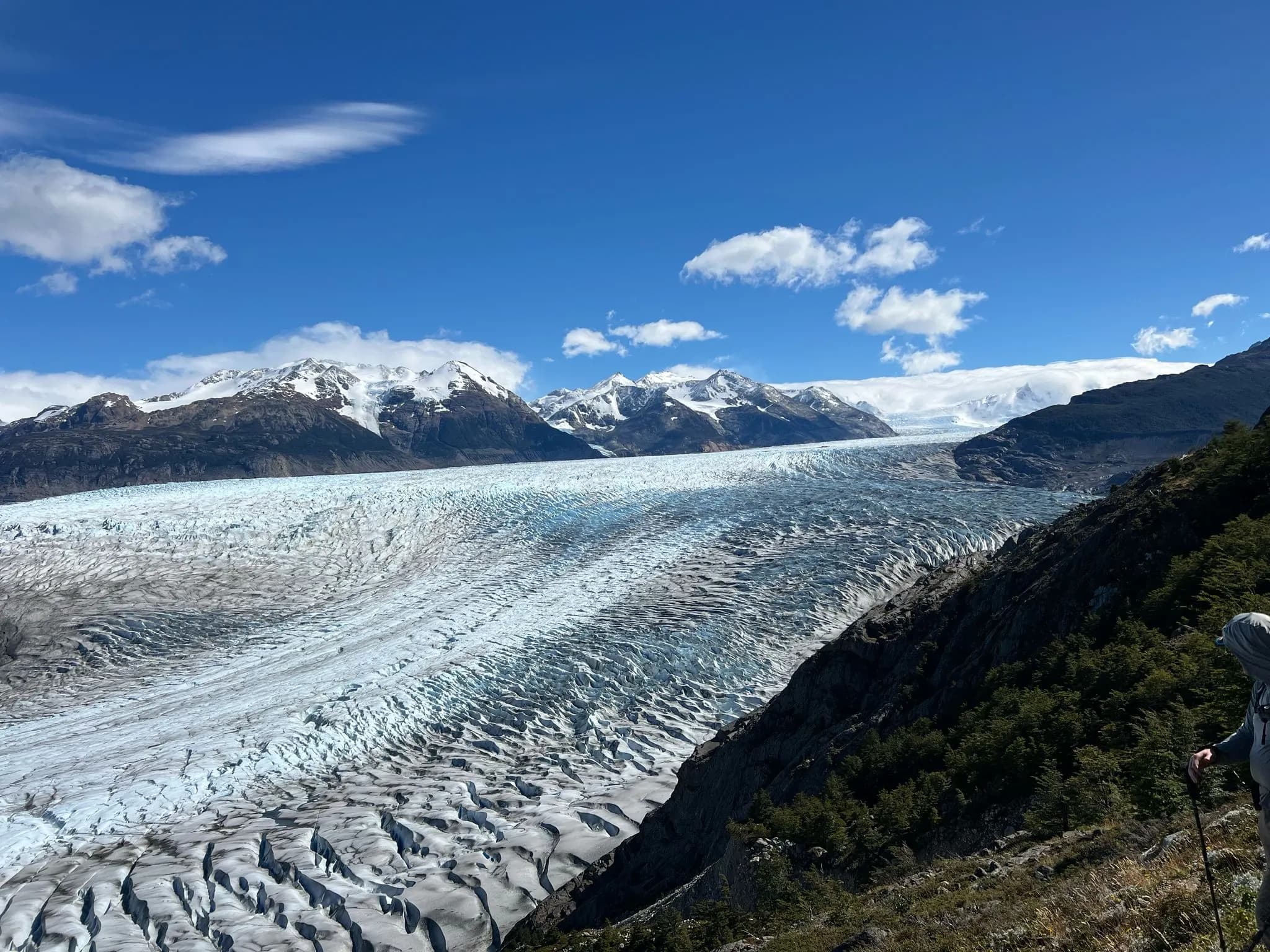
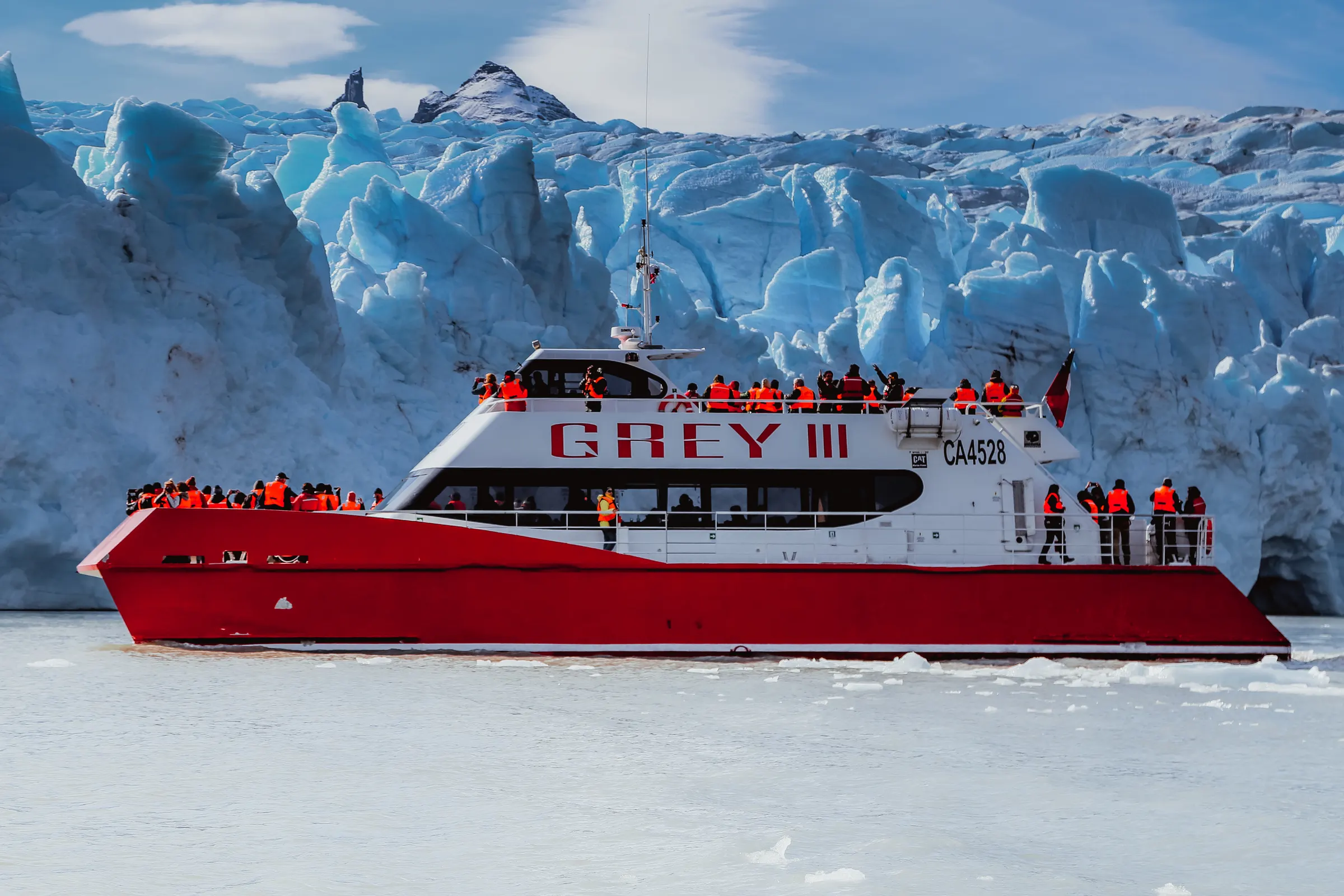
Day 6. Grey Glacier. Transfer to the Lago Grey sector, a 30 to 45 minute walk across Playa Grey to the pier, and about 2 hours 45 minutes on the Grey III catamaran toward the glacier face, among icebergs, with Paine Grande above the lake. Then back to Puerto Natales for the last night.
Day 7. Departure. Breakfast, check-out and a private transfer to PNT or PUQ.
Meals are included on the Base Torres, Cuernos and Grey days. On the horseback and puma days, and for dinners in town, meals are on you. Park entrance fees, transport, poles and crampons, and certified guides are included.
The shorter version
If you want fewer days or a gentler week, Torres del Paine Classic is 5 days and 4 nights from the same kind of hotel, with three guided days: a flexible full day in the park (Base Torres, a day of viewpoints, or a mix of both), a 3-hour horseback ride and the Grey Glacier boat. It is rated low difficulty and takes groups of 1 to 12. If you choose Base Torres for the full day, that day becomes demanding; the rest stays gentle.
The practical difference: Active adds Base Torres as a fixed day, the Cuernos sector and puma tracking, and runs in groups of up to 6. Classic keeps the park day flexible and leaves the pumas out.
The park rules that apply to day visitors
These are the rules that matter if you visit on day trips, with the official source in the list at the end. CONAF adjusts them with the weather, so check the date at the top of this page.
- The park pass is sold online only. It is not sold at the gate. On our programs the entrance fees are included and we send you the pass; carry it with your passport.
- You cannot walk the trails without daylight. CONAF does not allow hiking in the dark, which is one reason the Base Torres day starts around 06:00 in the long days of summer.
- In winter, a guide is required on Base Torres and the W. From April 27 to August 30 the park applies its winter rules: the Base Torres trail and the W can only be walked with a guide, and CONAF can extend that period when snow and ice remain. Our guides are included, so this changes nothing for you, but it rules out going on your own in those months.
- The O Circuit closes in winter. The sectors on the back of the massif (Dickson, Los Perros and the pass) are closed in winter, and CONAF announces through its official channels when they reopen. If your trek dates fall close to that reopening, a hotel-based week is the realistic plan B. Our O Circuit guide tracks the status.
- Weather closes trails on the day. Wind, rain and temperature thresholds can close a sector with little notice. A guided day trip has an advantage here: if Base Torres closes, your guide moves the day to another sector instead of losing it.
Weather and what to bring
Sun, rain and strong gusts can all happen on the same day in any month, on the boat included. For a day-trip week you need waterproof jacket and pants, a warm mid layer, quick-dry base layers, a warm hat and gloves, broken-in hiking boots and wool socks, a daypack with a rain cover, a headlamp, a reusable water bottle, sunglasses, sunscreen and a sun hat. On our programs poles and crampons are provided. Travel insurance is required and is not included.
Our hiking boots or trail shoes article covers the one piece of gear people get wrong most often.
When to go
Both programs run year-round, with November to March recommended: long days and the boat sailing daily. From May to August the Grey boat runs on fewer days, so we book the navigation on a sailing day and, if the boat stays in port, the guide leads a walk to the Grey beach viewpoint, Salto Grande and Mirador Cuernos instead. Puma tracking runs year-round. In the winter months the park requires a guide on the Base Torres trail and the W, which is one more reason a hotel-based week with guided days is the way we take people to the park between May and September.
If you want to join a small group on set dates, our fixed departures for 2027 include an Active departure in September.
Plan your week
Tell us your dates, who is coming and how far each person wants to walk, and we build the week around that: Active, Classic, or a tailor-made version with nights inside the park. We reply within one business day, Chile time.