Pumas live across most of the Americas, from Canada to the southern tip of Chile, and in almost all of that range they are close to invisible. In the eastern sector of Torres del Paine, on open steppe around Laguna Amarga, you can watch one through a spotting scope for an hour while it sleeps, grooms or stalks a guanaco. That is why people now fly to Patagonia for the cats as much as for the granite towers.
This guide covers what we know about the pumas of Torres del Paine, where and when to look for them, the rules that came into force in 2025, and what a tracking day is really like. It is written by our guides, who work in the park, and every figure comes with a source at the end.
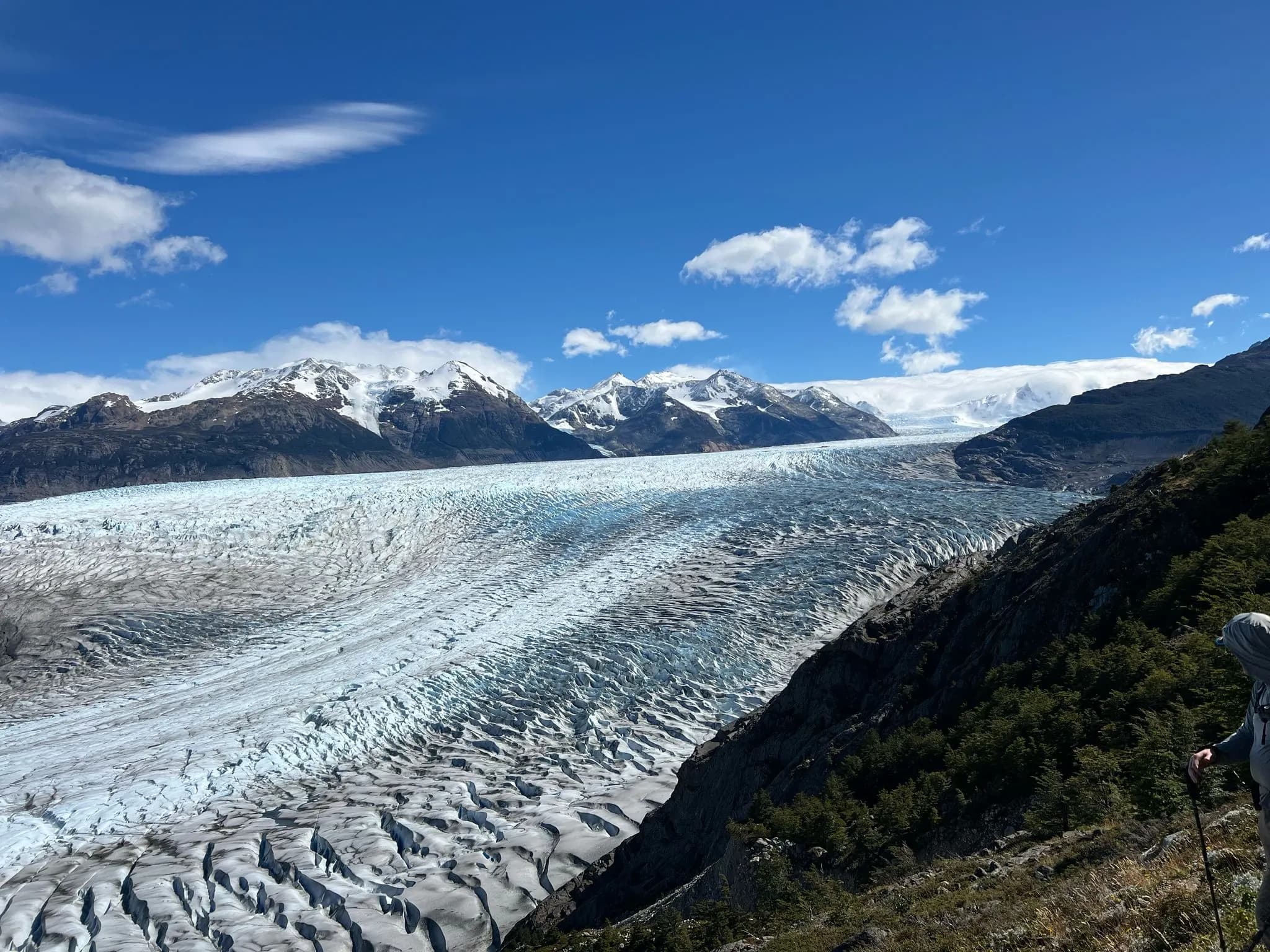
My first puma sighting was on the way into Laguna Amarga from the west side of the park, coming back from a Grey Glacier navigation. I noticed a bush moving far too much, so we stopped the van and I spotted the puma with binoculars. We stayed in the vehicle about 100 meters away and watched it come closer, then move off on the other side of the road.
At a glance
- Where: eastern sector of Torres del Paine, around Laguna Amarga and Lago Sarmiento
- When: year-round; our guides favor April to November
- Time of day: first light and late afternoon
- Minimum distance: 50 m, and 100 m with a female and cubs or a hunting puma (2025 protocol)
- Group size: up to 6 guests per guide
- Sightings: likely with a good guide, never guaranteed
Why Torres del Paine is the place to see wild pumas
More pumas per square kilometer
The most recent published estimate comes from Panthera, the wild cat conservation organization, working with CONAF. Using DNA from scat and camera traps, their team estimated about 5.1 independent pumas per 100 km² in the Torres del Paine area, which they describe as nearly triple the average across the Americas. The first long-term study in the park, run from 1986 to 1989, found one puma per 17 km² in its 200 km² study area during the winter of 1988.
Park officials have put the number at 50 to 100 pumas inside the park and 50 to 200 in the wider region. Treat any single figure with caution: pumas move in and out of the park, and counting a cryptic cat is hard. What researchers agree on is that the density here is unusually high, and that the population is the most observed in the Americas. A 2024 genetic study observed 39 individual pumas between 2017 and 2021 in a study area of roughly 60 to 80 km², and found no sign of a genetic bottleneck.
A steady supply of guanacos
Pumas are here because the food is here. The guanaco, a wild relative of the llama, is their main prey. A 2026 DNA study of puma scat from the Torres del Paine landscape found guanaco in 68.4% of samples and more than 95% of native prey DNA. The 1980s study found that guanacos, especially young ones, were the most important prey by weight, and that European hares, an introduced species, were eaten more often than their numbers would suggest.
Protection and open ground
Hunting pumas has been illegal in Chile since 1980, and the species is protected under the Hunting Law administered by SAG. Ranchers around the park once killed pumas to protect their sheep. Around Laguna Amarga, several ranches have since moved into tourism, and researchers report that ranchers closer to the park see more pumas than those farther away.
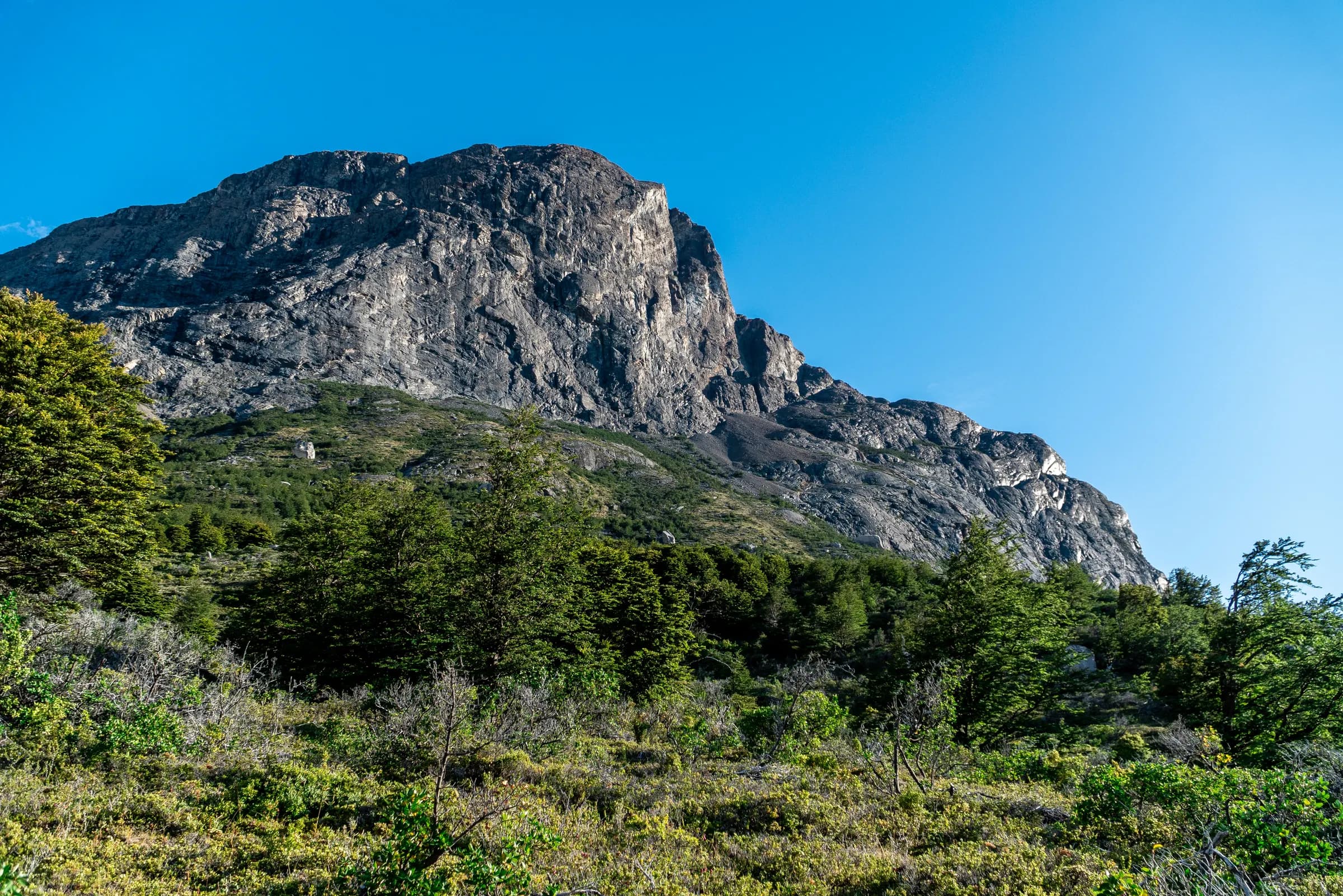
The last piece is the landscape. The eastern side of the park is open steppe: grass, low shrubs, rocky ridges and long sight lines. A puma resting on a hillside 300 m away is hard to find, but once your guide finds it, you can watch it without getting close.
What you are looking for: puma basics
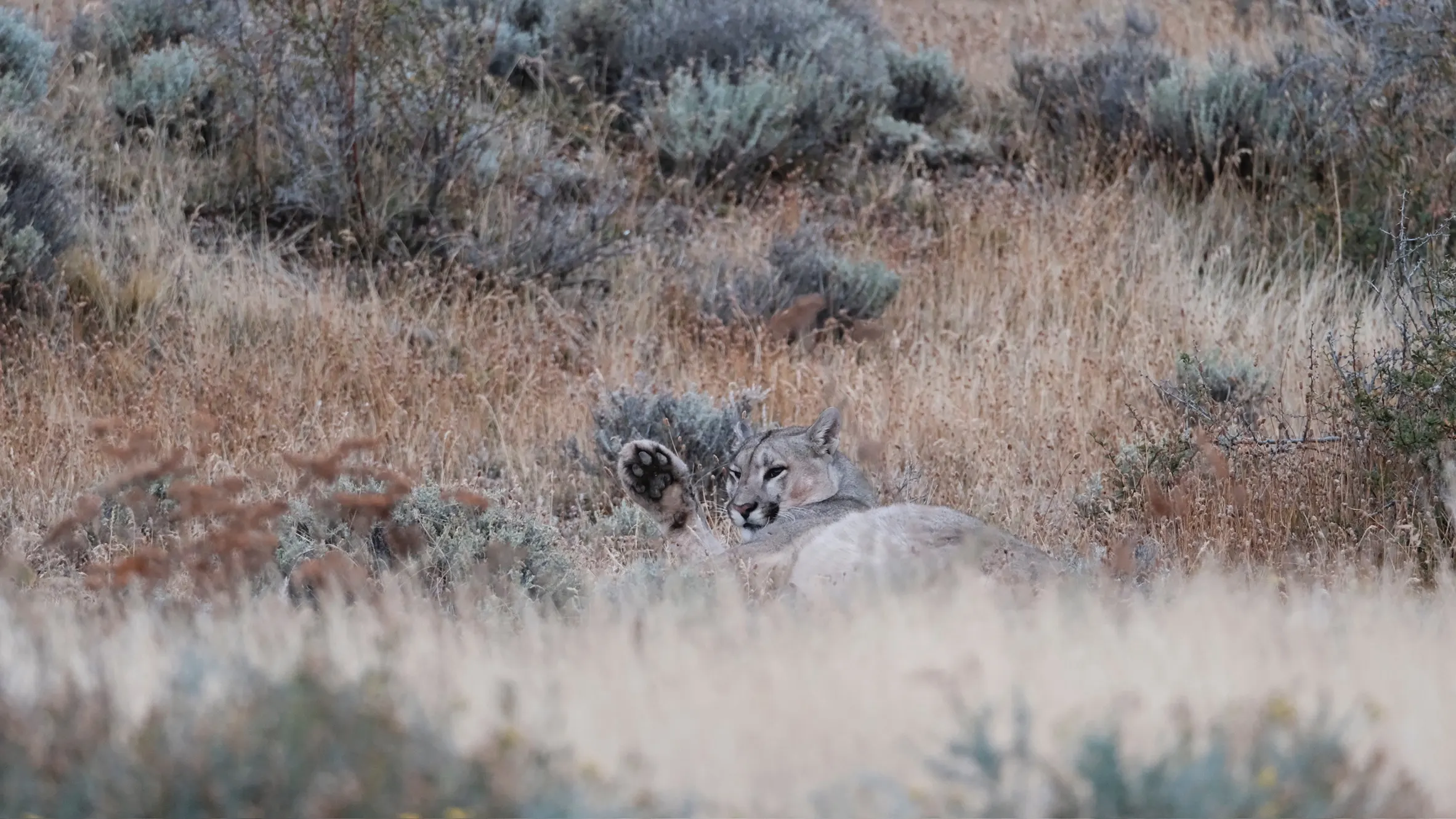
The puma (Puma concolor) goes by many names: cougar, mountain lion, león. In Torres del Paine, adult males averaged 76 kg and adult females 48 kg in the 1980s study, and home ranges varied from 24 to 107 km². The coat runs from tawny to grayish, and on dry steppe grass it disappears. Expect your guide to point at a slope several times before you see the animal, even through binoculars.
Pumas have a reputation as strictly solitary cats, and research has softened that view. In Wyoming, Panthera scientists filmed pumas sharing kills with specific neighbors. In Torres del Paine, researchers have documented social behavior between adult females, and much of what visitors see involves mothers with cubs. The genetic study above identified 13 females and 7 males from scat collected in a single month, which matches what guides see in the field: females with territories in the eastern sector, raising cubs year after year.
Where to see pumas in Torres del Paine
The eastern sector and Laguna Amarga
Laguna Amarga is one of the park's entrances. The steppe around it and toward Lago Sarmiento holds most of the published puma research in the area and most of the tracking. Puma tracking days, including ours, focus here.
Inside the park vs. private land
This is the difference most guides skip, and it matters.
Inside the national park, CONAF rules apply. Photography, wildlife viewing and photo safaris are allowed only from official marked trails, walking off trail is not allowed, and feeding or disturbing native wildlife is prohibited. Hiking is allowed only in daylight. In practice, that means watching from viewpoints, trails and authorized stopping points along the roads.
On private land bordering the park, the owner sets the internal rules for access, and the 2025 protocol applies there too (see below). That is where some tracking includes walking across open ground toward a viewing spot. Ask any operator, including us, where the day takes place and on what terms.
One more reason to think about where you are: a study of camera traps in the southeast of the reserve found that pumas avoided areas with more roads and trails. During the busy summer season, roads had two to three times the impact on where pumas were found than prey did. Fewer cars stopping along the road is better for the cats.
When to go: the puma season, month by month
Pumas live in the park all year, and we run puma tracking all year. What changes is light, weather, crowds and the cats' daily rhythm.
Winter (June to August)
Days are short, so the hours when pumas move overlap with the hours you are in the field. The camera trap study found that in winter, pumas had a small activity peak around midday, matching the guanacos, and a larger one at sunset. Fresh snow shows tracks, and a tawny cat stands out against white ground. Mornings are cold, so dress for standing still. Visitor numbers are at their lowest: in the same study, monthly visitors in summer were 892% higher than in winter.
Spring (September to November)
Guanaco calves, called chulengos, are born from about November to January, after a gestation of around eleven and a half months. Young guanacos are a key part of the puma diet, so the steppe gets busy. Crowds are still moderate and days lengthen quickly.
Summer (December to February)
The longest days and the most visitors. Pumas shift to a two-peak pattern, with the highest peak around sunrise and a second around sunset. That means very early starts. Wind is part of a Patagonian summer, and you will share the road with more vehicles.
Autumn (March to May)
The lenga forests turn red and crowds thin after the summer peak. Days shorten, so dawn starts get easier.
Our view: our guides consider April to November the optimal window, with winter as the quietest and most rewarding season for pumas. If you are coming in summer for the W Trek or Base Torres, a puma day still works well. Just accept the early alarm.
In summer pumas have many more hours of daylight, which in theory makes them harder to find, and the park is busier and windier. In winter the short days shrink the window when they move in daylight, and that raises the odds of a sighting.
How a tracking day works
Reading the steppe
Puma tracking is mostly patient scanning. Your guide glasses the slopes with binoculars and a spotting scope, checks known resting areas, and reads the animals around you. Guanacos warn each other with a sharp, high-pitched alarm call, and a herd staring in one direction is often the first sign that a cat is nearby. Andean condors are another clue: in a study in Chilean Patagonia, condors turned up at 43% of puma kills where their presence could be confirmed.
When the guide finds a puma, the group sets up at a measured distance and watches. Sometimes the cat sleeps for an hour. Sometimes it gets up, walks a ridge and drops out of sight. Most of the day is waiting, and that is normal.
Our puma tracking day
Our puma tracking experience is a full day in the eastern sector with a certified wildlife-tracking guide:
- Start: pickup at your hotel in Puerto Natales before sunrise, between 04:00 and 06:00 depending on the season and the time of sunrise
- Minimum age: 14, as the 2025 puma viewing protocol requires
- Length: 10–12 hours in the field, with a flexible schedule set by weather and wildlife
- How: scouting from a 4x4 and short, sometimes brisk walks over uneven ground
- Gear: spotting scope and binoculars; the vehicle carries Starlink internet
- Food: snacks and coffee in the field
- After: your guide shares photos from the day
- Format: private or small group, 1–6 guests, for one day or several days in a row
Along the way you are likely to see guanacos, Andean condors, foxes and ñandús, the Darwin's rhea.
If you want the park on foot as well, our Torres del Paine Active trip builds a dawn puma tracking day into seven days from a Puerto Natales hotel, together with the Base Torres hike, the Cuernos sector, horseback riding and Grey Glacier.
The rules: the 2025 puma viewing protocol
Puma tourism around Torres del Paine has existed for about 20 years and grew quickly from 2014. More groups chasing the same cats raised real concerns. In 2018, the head of public use at the park warned that pumas growing used to people could start to see them as possible prey.
In 2025, the Municipality of Torres del Paine, Panthera, The Nature Conservancy Chile, the Torres del Paine Legacy Fund and Sernatur Magallanes published a Protocol for Responsible Puma Viewing. It covers the national park, private land and public roads within the municipality, and the municipal tourism ordinance of September 2025 refers to puma viewing protocols. The main points:
- Distance: at least 50 m from the puma, measured with a rangefinder, not estimated
- 100 m when the puma is moving and being followed, when it is stalking or hunting, or when it is a female with cubs
- Dens: no approach or viewing for tourism at dens with cubs that cannot yet move with their mother
- Group size: up to 6 visitors per guide and 12 visitors per sighting, plus guides
- Sharing a sighting: when groups overlap, the group that has been there longest leaves after 40 minutes
- Escape route: groups stay within a quarter of the circle around the animal, leaving three quarters open
- No baiting of any kind, visual, scent or food
- No drones without authorization from the civil aviation authority
- From vehicles: engine off, speakers off, no horn, and no stopping where parking is not allowed
- No flash and no devices that make noise; no night viewing with visitors
- Clothing: neutral, muted colors, and no stiff, noisy rain gear
Guides also have to carry radios, a rangefinder, binoculars, a whistle and a first aid kit, and visitors get a briefing and sign a form before heading out. If a guide tells you to back off, step behind the vehicle or leave a sighting, this is why.
A good sighting under these rules is a puma that keeps doing what it was doing before you arrived. That is the one worth having.
Sighting odds, honestly
You will read "nearly 100%" on many websites. We don't say it. Pumas are wild and move across unfenced terrain, and no one can guarantee a sighting. What raises your odds:
- A guide who works the sector and knows which females hold which ground
- More than one day. Several consecutive days give you more chances, and multi-day tracking is something we can arrange on request
- The right season. Short winter days line up the cats' active hours with your time in the field
- Patience. Groups that leave after 20 minutes of scanning miss the cat that wakes up at minute 40
What to wear and bring
You will spend hours standing or sitting in the wind, often in the cold at dawn.
- Layers: a moisture-wicking base layer, a fleece or down jacket, and a windproof, waterproof shell
- Neutral colors: gray, brown, olive, khaki. Bright colors stand out on the steppe
- Quiet fabrics: stiff rain shells rustle; softer outer layers are better for sightings
- Warm hat and gloves, even in summer
- Waterproof boots with good grip for walks over uneven ground (more in our guide to hiking boots or shoes for Patagonia)
- Camera: a telephoto lens of 400 mm or longer, spare batteries and memory cards. Cold drains batteries
- Your own binoculars if you have them
- A daypack for your gear on the walks
If you don't have a long lens, don't worry. The scope gives close views, and the guide shares photos from the day.
If you meet a puma on the trail
Pumas in Torres del Paine generally avoid people, but hikers do meet them, and the park itself warns that walking in the dark raises the risk. That is one reason hiking is allowed only in daylight. If you see a puma while hiking:
- Do not run, and do not turn your back on it
- Stay together as a compact group
- Leave calmly and slowly, making as little noise as you can, keeping the puma in view
- If it keeps coming toward you, make yourself loud: shout, whistle, clap
If you see one from a car, do not stop where parking is not allowed. If you are already at an authorized stop, stay inside with the engine and music off.
For the rest of your planning, from park passes to refugios, see our Torres del Paine travel guide and our overview of Chilean Patagonia.
Plan your puma day
A puma day fits in almost any Torres del Paine trip: as a standalone puma tracking day, as part of Torres del Paine Active, or as several tracking days inside a tailor-made trip. Tell us your dates and how much time you want to give the cats, and we will tell you what makes sense for that season.